

There was a time when buying a new smartphone felt like upgrading from a horse and carriage to a steam locomotive. Every year brought a jarring, exciting, and occasionally terrifying leap in what these little glass slabs could do. But in 2026, the smartphone has reached a sort of “technological middle age.” It’s mature, reliable, and honestly, a bit more like a high-end kitchen appliance than a futuristic gadget.
However, don’t let the familiar silhouette fool you. Underneath that Gorilla Glass Victus 5 is some of the most sophisticated engineering humanity has ever achieved. We’ve spent the last month living with the 2026 flagship class, and it turns out that “boring” is just another word for “nearly perfect.”
THE NANOSCOPIC PLUMBING: 2NM SILICON
The real story of 2026 isn’t the screen or the cameras, it’s the plumbing. The move to the 2nm fabrication process is a marvel of physics that shouldn’t actually work. We are essentially etching circuits so small that we have to start worrying about individual electrons accidentally tunneling through the “walls” of our transistors.
What does this mean for us? Efficiency. In our testing, “all-day battery” has shifted from a marketing promise to a boring reality. These devices can now handle native ports of high-end PC titles, think ray-tracing and complex physics simulations, without turning into a pocket-sized space heater.
Note: The thermal management in this year’s chips is so efficient that most manufacturers have abandoned internal vapor chambers entirely. The silicon itself just isn’t generating the waste heat we’ve spent a decade trying to mitigate.
THE ARTIST IN THE LENS
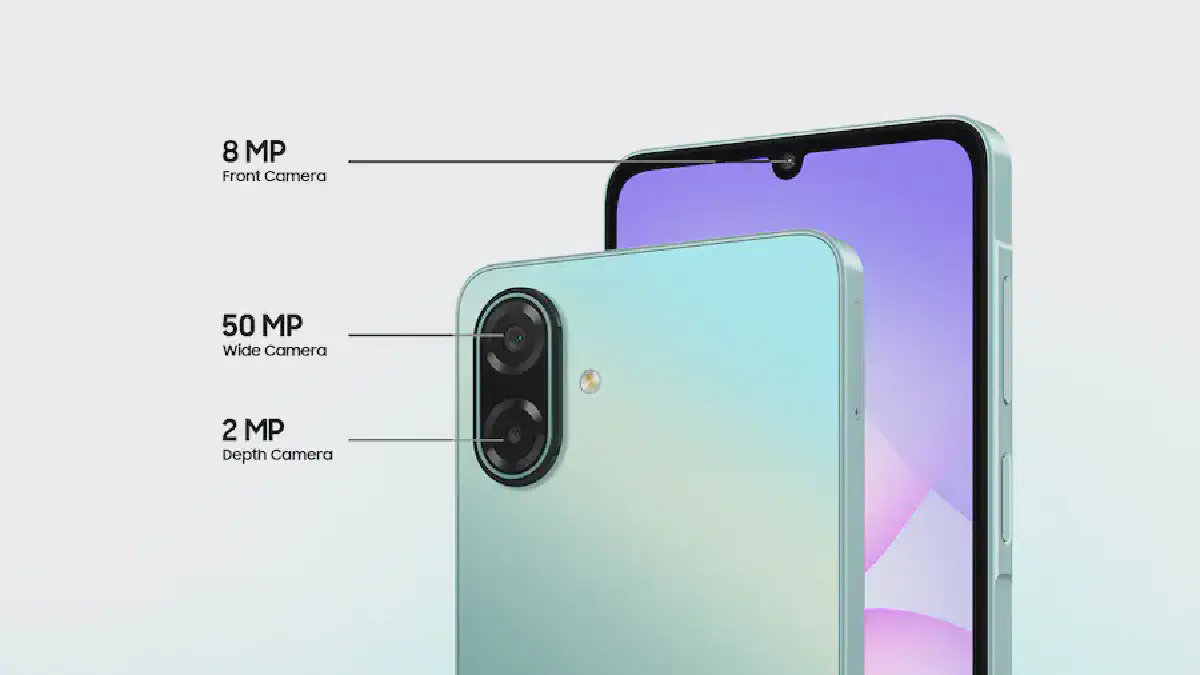
Megapixel counts have finally plateaued, and we couldn’t be happier. Instead of chasing numbers, engineers are now focusing on computational artistry. Every time you press the shutter button, a dedicated AI accelerator is performing millions of operations per second to re-light your scene.
It’s like having a professional lighting technician living inside your camera bump. In high-contrast environments, the algorithms don’t just “average out” the exposure; they identify the subject, understand the direction of the light, and virtually “bounce” light back into the shadows to create a balanced, cinematic image.
Pro-Tip: If you’re a developer, keep an eye on the new Neural Processing Unit (NPU) APIs. We are seeing a massive shift where “software-defined hardware” is becoming the primary driver of the user experience.
THE CURSE OF THE INVISIBLE UPGRADE
If there is a critique to be made, it’s that these improvements are almost entirely invisible. You can’t see the 2nm efficiency, and you can’t feel the AI re-lighting, you just notice that your phone is never dead and your photos are always great.
For the gadget enthusiasts among us who crave a visible revolution, the 2026 landscape might feel a bit static. We are no longer upgrading because the new phone is “faster”; we are upgrading because the software tools embedded in the OS have finally caught up to the hardware’s potential.
THE VERDICT
The 2026 Android flagship isn’t a revolution; it’s the final, polished form of a decade of iteration. It is a masterpiece of invisible engineering that works so well you’ll likely forget how difficult it was to build.
Final Score: 9.2 / 10
KEY TAKEAWAYS
- 2nm Efficiency: Battery life has reached a “set it and forget it” state for the first time.
- AI Artistry: Computational photography now focuses on re-lighting and scene composition over raw resolution.
- Thermal Mastery: High-end gaming is now possible without significant heat or throttling.
- Mature Ecosystem: The focus has shifted from hardware specs to seamless software-driven experiences.